The Edit · Travel · Tucson
The Edit · Travel · Tucson
The drive is easy and slightly disappointing, which turns out to be the point. Two hours down the 10, mostly nothing, and then Tucson arrives without any of the announcement Phoenix makes — low buildings, mountains on four sides, a downtown you can cross on foot in twenty minutes. Go between November and April. It's one of the best short trips in the state, and almost nobody in Scottsdale takes it.
The Neighborhood
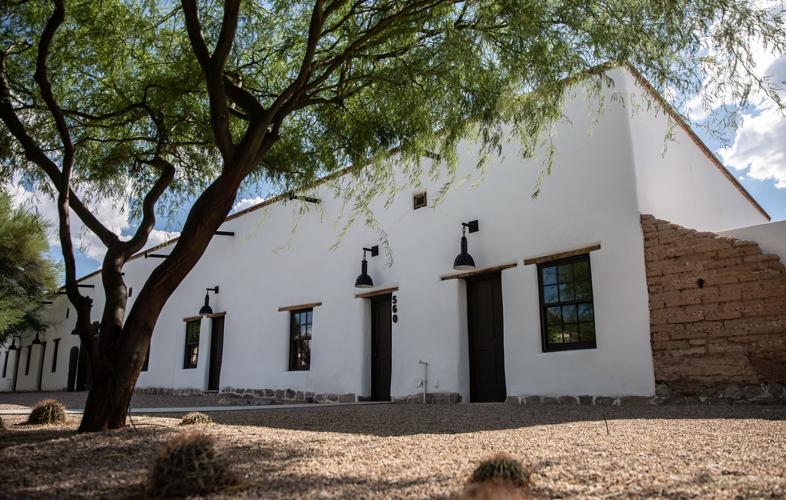
It's the oldest neighborhood in Tucson: a few blocks of Sonoran row houses south of downtown, adobe walls set flush to the sidewalk, flat roofs, doors painted in colors that would look ridiculous anywhere else and look inevitable here. It nearly didn't survive. In the 1960s the city drew a freeway straight through it — the Butterfield Expressway — and began clearing. By the time the state abandoned the plan in 1972, roughly two hundred buildings were already gone.
What stopped it wasn't a lawsuit. It was, in part, four couples who bought an 1860s house on Cushing Street and opened a restaurant in it — the argument being that a building nobody uses is easy to condemn. The freeway died the same year they opened the doors. That house is still standing, and you can still eat in it: The Coronet moved into 198 W. Cushing in 2019, taking the space that had been a bar and restaurant since 1972, and a tailor's shop and a country store before that. Know the schedule before you plan around it — the restaurant serves Friday and Saturday evenings only, while the cafe handles mornings, Friday and Saturday from seven and Sunday until two. Sit in the courtyard. It was the original owner's backyard.
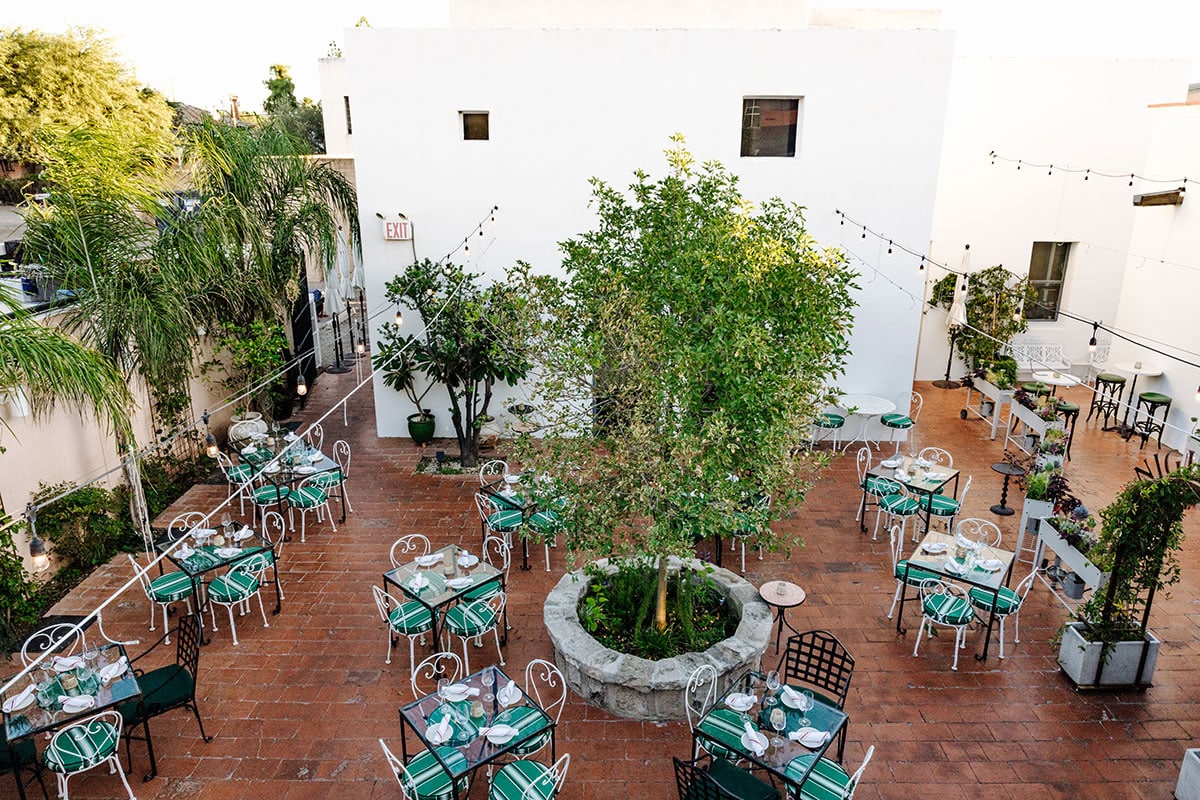
A building nobody uses is easy to condemn. A building full of people at dinner is not.
The House on Convent
Three blocks from that table, at 560 S. Convent, is a row house built in 1879 by Giovanni Pascale — an Italian carpenter, not an architect, who owned and rented houses through the barrio and kept adding rooms to this one as his family grew. It stayed in the Pascale family until 1943, changed hands repeatedly after that, and was saved from demolition more than once.
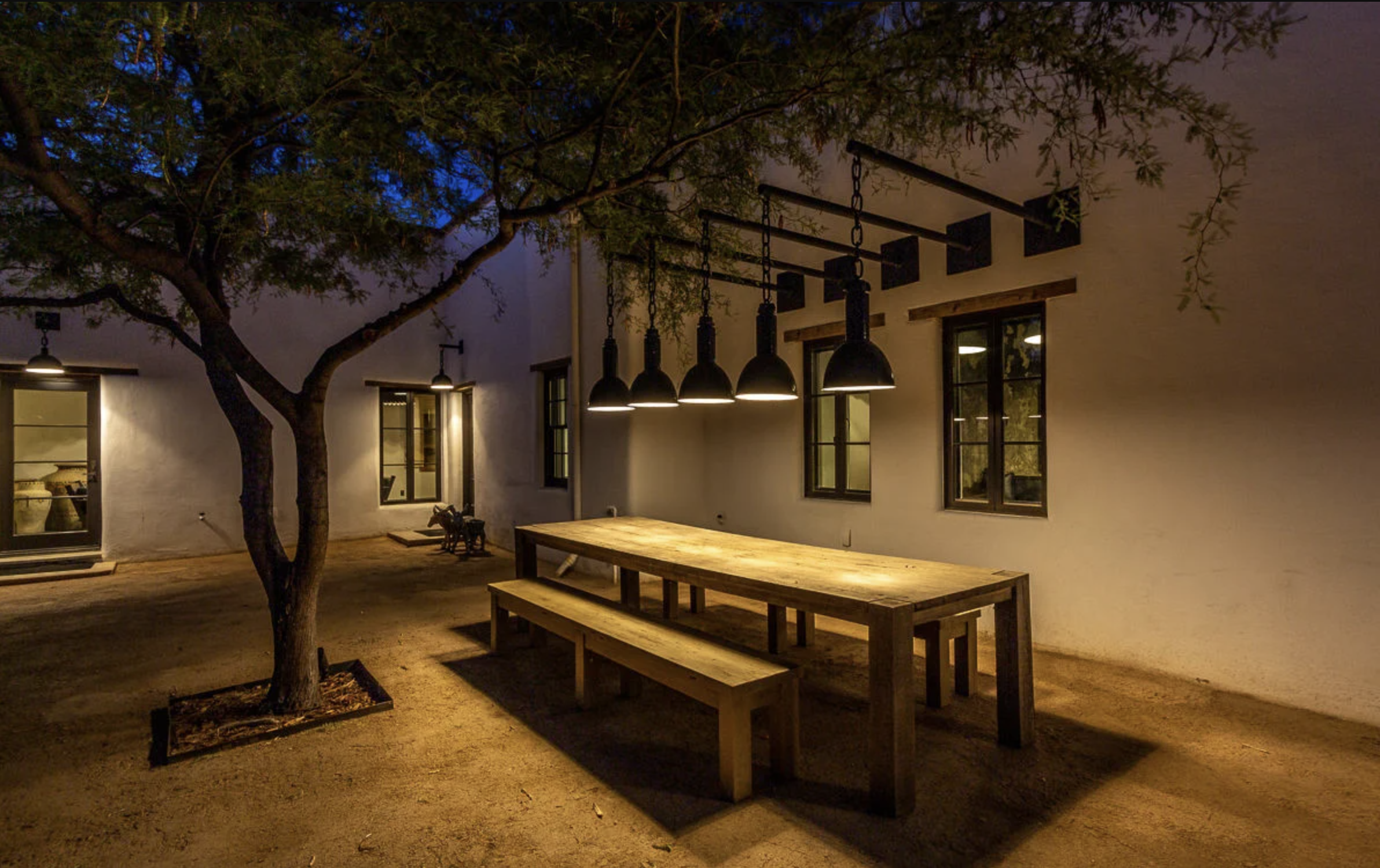
In 2018 Diane Keaton bought it for $1.5 million. She told Jimmy Kimmel she'd bought a barrio property, that she was going to fix the adobe, and that Tucson was underappreciated — and she was explicit that she had no intention of living in it. She spent two years on it anyway: mud-plastered walls left as they were, wood beams exposed, and beneath those beams, light fixtures scaled far past what the ceilings called for. That last decision is the one every write-up fixated on, and it's the one you notice first in photographs. Keaton died in October 2025, at seventy-nine. The house sold the same month. You can't go inside — walk past it anyway, then keep walking. On a spring Saturday you'll find families photographing teenagers against the adobe in prom dresses, which tells you what this neighborhood is for better than any plaque would.
Across the River
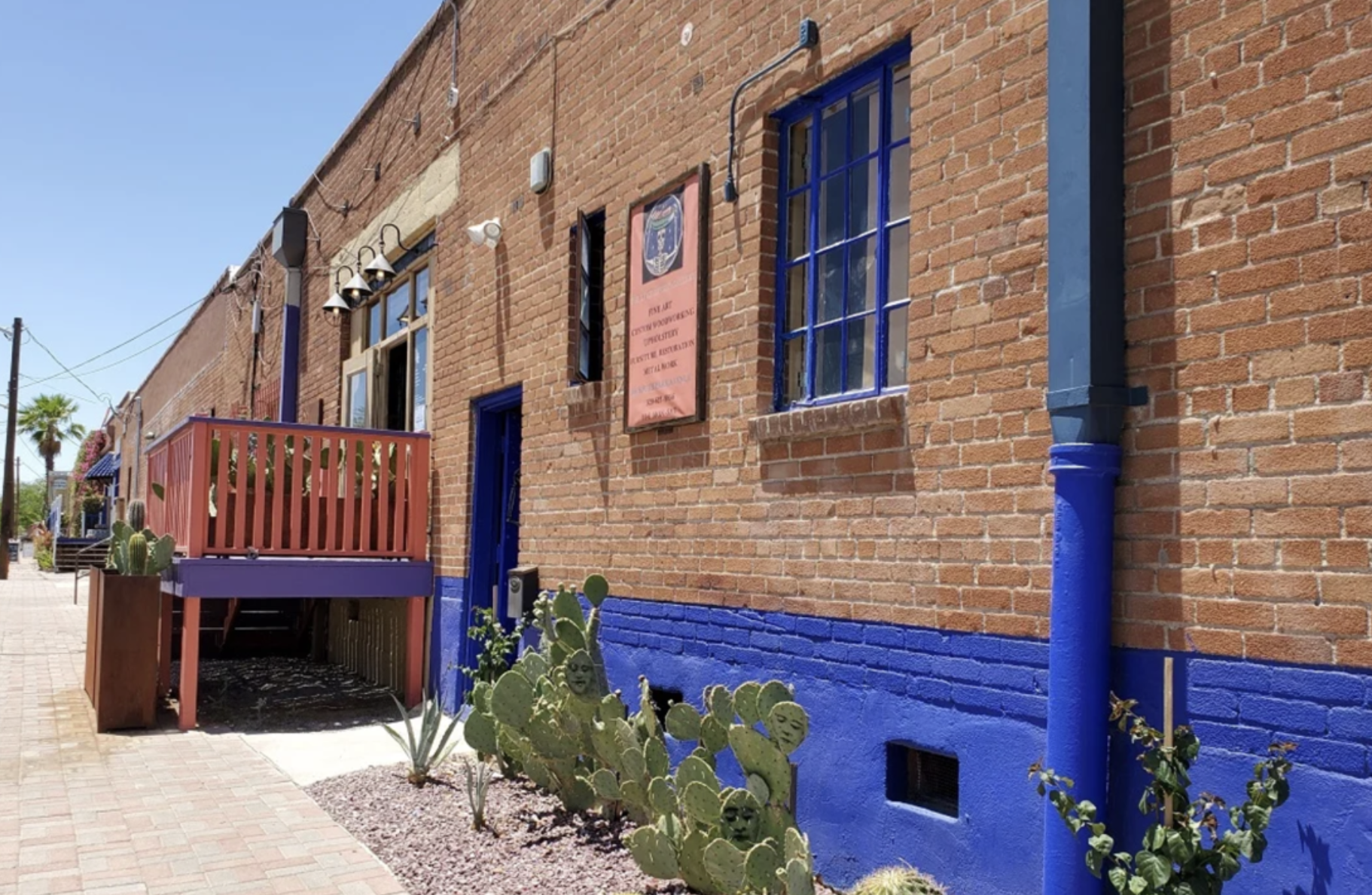
Ten minutes west, across the Santa Cruz, is the answer to a question the barrio raises and can't answer on its own: what do you build now, next to something that old, without either faking it or insulting it. The Mercado District in Menlo Park has been working on it in phases for fifteen years — first the Mercado San Agústin, a market hall on Avenida del Convento; then the MSA Annex, thirteen small businesses in modified shipping containers; then the Monier, apartments with shops underneath. None of it is dressed up as historic. All of it defers to what surrounds it. The free Sun Link streetcar stops at the door.
Under the Monier is a slice shop called Whole Slvce, opened by a Tucson native who left for New York in 1997, spent ten years as head baker at Sullivan Street Bakery, and came home to do one thing well. Every pizza has a vegan version. Then save an hour for the Lost Barrio — three blocks of old brick warehouses on South Park Avenue below Broadway, in Barrio San Antonio. From the street it looks like buildings nobody wanted, which is how it stayed cheap long enough to become what it is: hand-forged iron, carved Mexican doors, colonial furniture, imports nobody in Scottsdale is carrying. Most shops run Tuesday through Saturday. Bring a truck or bring restraint.
The Stay
Thirty minutes northwest of downtown, The Ritz-Carlton, Dove Mountain sits at three thousand feet in a canyon, and it's the reason to make this two nights instead of one — Forbes Five-Star for both resort and spa in the 2026 awards, three pools, twenty-six miles of trail into the Tortolita Preserve, and dark enough at night that stargazing is a scheduled activity rather than a marketing line. The golf is Jack Nicklaus Signature. The members' club next door, The Golf Club at Dove Mountain, held the WGC Match Play for six years across twenty-seven Nicklaus holes — and if you know somebody out there, that's the round to angle for. The Gallery, the other guard-gated club in Marana, is the same proposition. Both are private. Both are worth the phone call.
A note for anyone doing the math: this is recognizably the same product as Mirabel or Estancia — gated, Nicklaus or better, a resort at the gate, mountains out the window — at a materially different price per square foot. That gap is real. It's also worth understanding exactly what it buys and what it costs before anyone treats it as an arbitrage. Ninety minutes is not far on a map. It's a considerable distance from everyone you know.
A neighborhood very nearly erased, saved in part by people who moved in and opened the doors — and, a few blocks over, new buildings that took the lesson. It's a good weekend. It's also a useful argument about what restoration is actually worth, which is not a small thing to turn over on the drive home. Considering Southern Arizona, or wondering what a second property down there really costs to own? Marta is always happy to trade notes.